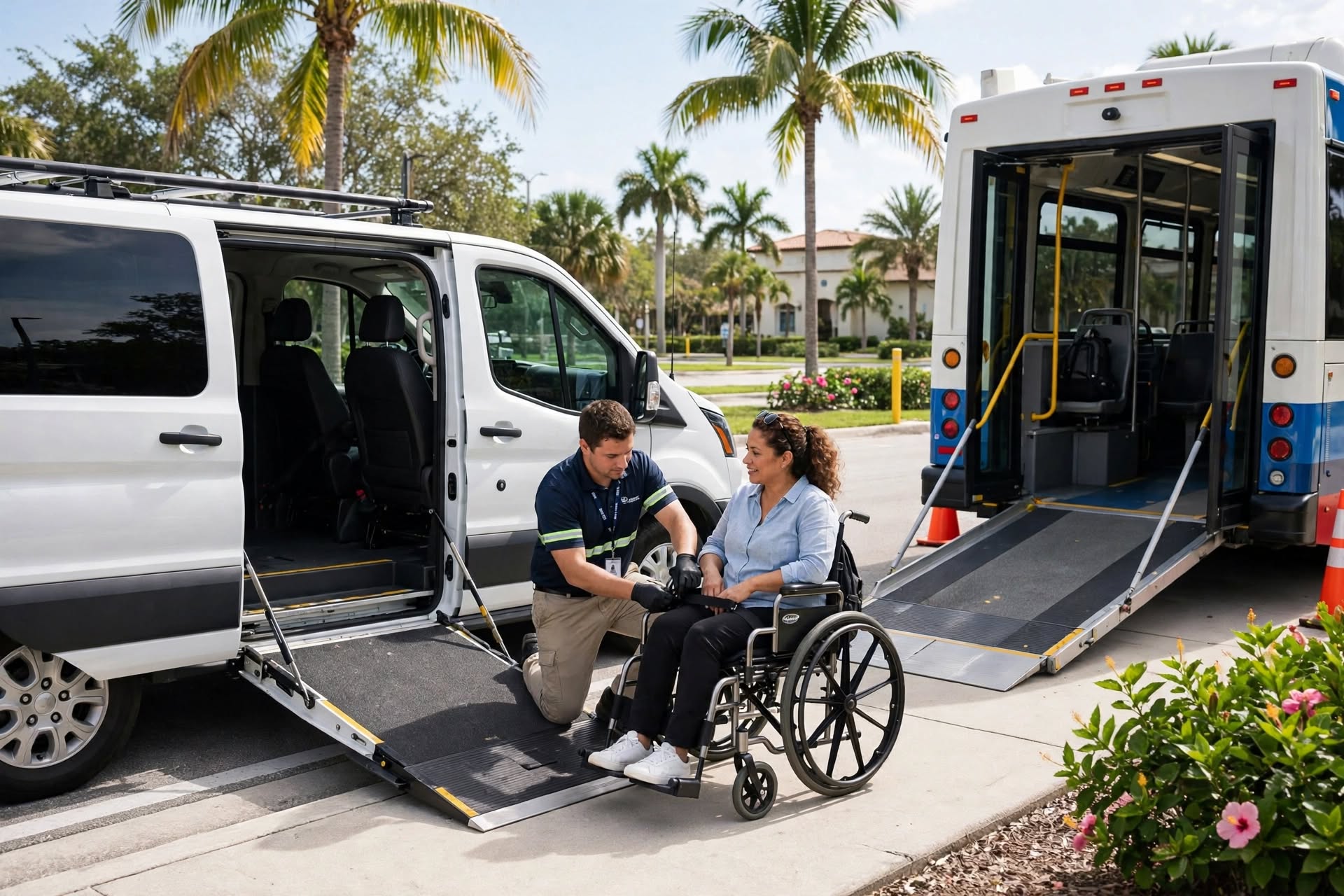
Booking a ride for someone who uses a wheelchair involves details that never come up with an ordinary car trip. The vehicle has to be built for it, the chair has to be secured properly, and the pickup location has to allow a ramp to come down somewhere flat.
Wheelchair transportation in Florida is widely available, but the equipment varies between providers and a van that works for one passenger will not work for another. Knowing what to ask about saves the situation where a vehicle arrives and cannot carry the person it came for.
Who Travels This Way
Some passengers use a chair full time and have been using it for years. They usually know their own equipment well and can say exactly what a provider needs to hear.
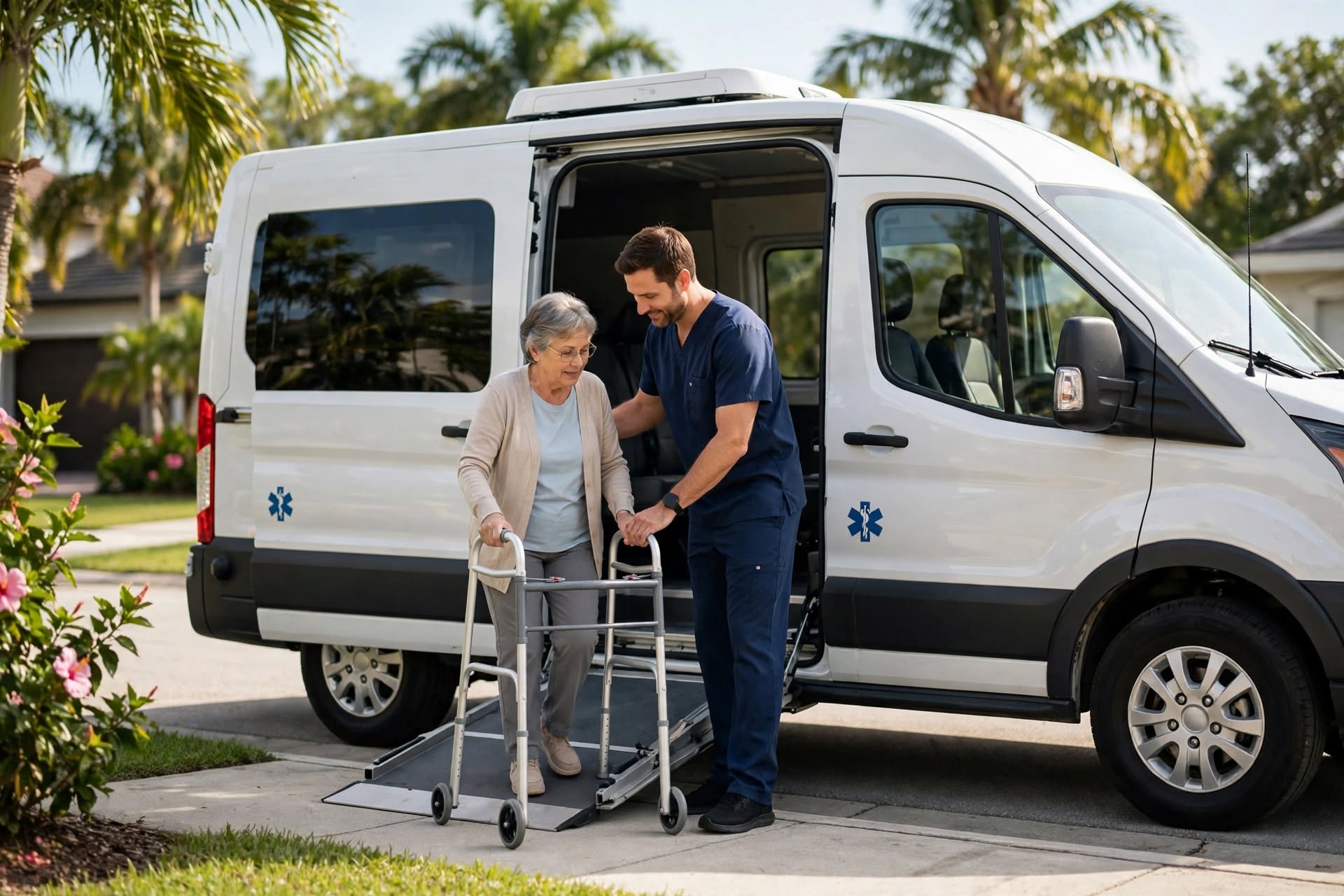
Others are newer to it. A patient discharged after a stroke, a hip fracture, or an amputation may be using a chair for the first time and have no idea what questions matter. Older adults sometimes walk short distances at home but cannot manage the walk across a hospital parking lot, which puts them in a chair for the trip even though they do not use one indoors.
Bariatric passengers are a separate case, since both the chair and the vehicle have weight ratings that have to be checked rather than assumed.
Vehicle Types Used for Wheelchair Transport
Ramp-Equipped Minivans
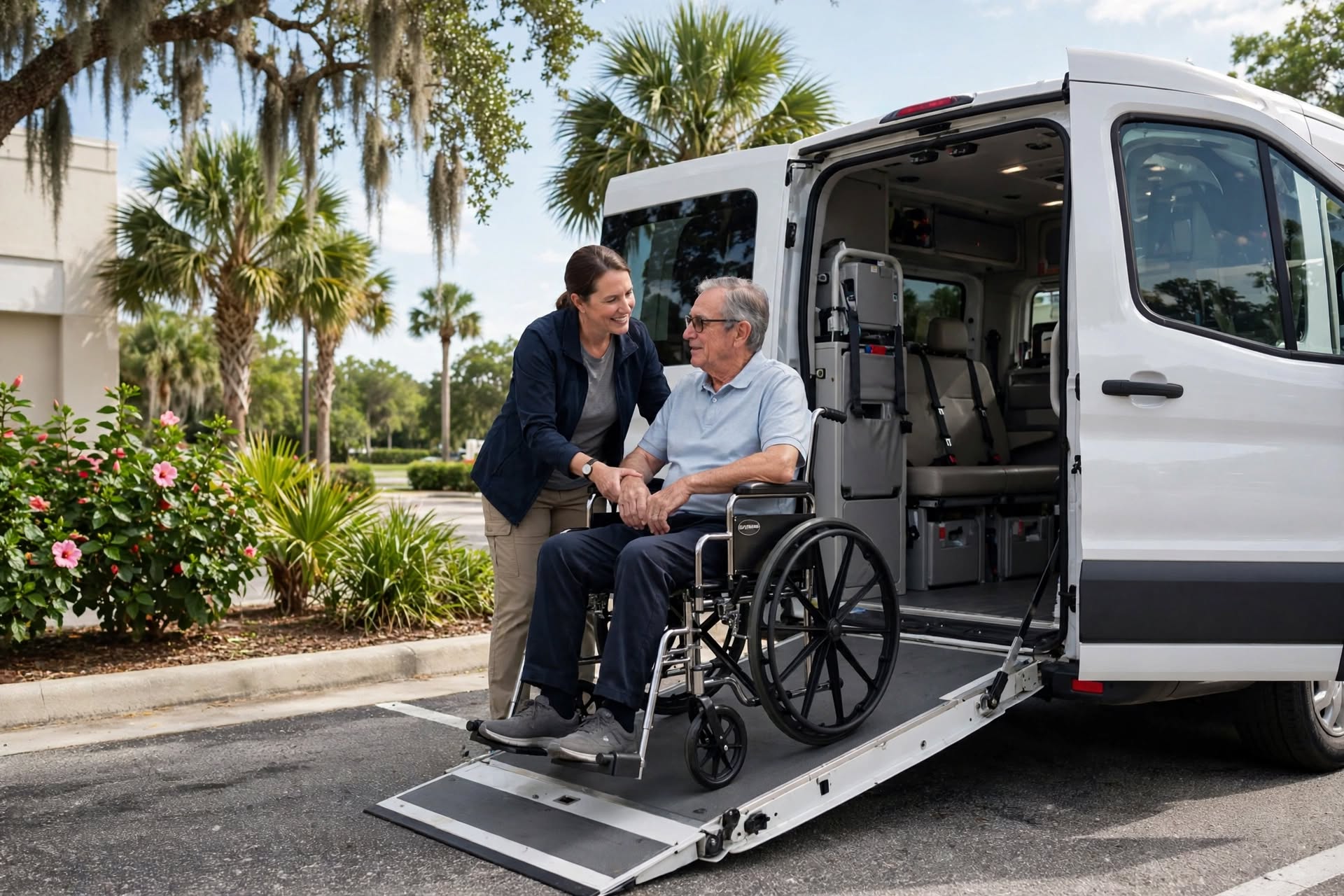
These are the most common vehicles in non-emergency fleets. A folding or in-floor ramp deploys and the passenger is rolled up into the vehicle, usually after the suspension lowers to reduce the slope.
Ramp vans come in side-entry and rear-entry layouts. Side entry needs clear space alongside the vehicle, which matters in a tight driveway or a crowded parking lot. Rear entry needs clear space behind. Neither works well against a curb with a steep drop or on a sharply sloped surface.
Minivan ramps generally handle manual chairs and most mid-size power chairs comfortably.
Lift-Equipped Vans
A hydraulic or electric lift raises the passenger and chair into a full-size van rather than rolling them up an incline. Lifts carry more weight than most ramps and suit heavier power chairs and bariatric equipment.
The platform has its own weight rating covering the chair and the occupant together. That number is worth asking about directly when a passenger uses a heavy power chair.
Full-Size Accessible Vans
Larger vehicles carry more than one wheelchair passenger at a time, or one passenger plus several seated companions. Facilities and group outings use them more often than individual bookings do.
How Boarding Works
The driver positions the vehicle on the flattest available ground and deploys the ramp or lift. On a ramp van, the passenger is rolled up with the driver controlling the chair from behind. On a lift, the chair is positioned on the platform, wheels locked, and the platform raised.
Once inside, the chair is turned to face forward and parked in the securement area. The driver then attaches tie-down straps to the frame of the chair at four points, two at the front and two at the rear, which holds the chair against movement in any direction.
The passenger is separately restrained with a lap and shoulder belt anchored to the vehicle rather than to the chair. This matters and is sometimes skipped by less careful operators. The chair tie-downs protect the equipment; the occupant belt protects the person.
The whole process takes a few minutes at each end once the driver knows the setup.
Preparing for the Ride
A little preparation at home makes the pickup faster and easier.
Clear a path from the door to where the vehicle will park, and move anything that narrows it. If there are steps with no ramp at the property, say so when booking, because that changes how the driver plans the pickup entirely. Gate codes, gravel driveways, and long walkways are all worth mentioning.
Charge a power chair fully the night before. Bring a phone charger, any medication needed during the day, and a light layer, since accessible vans run cool.
If the chair has removable parts such as a tray, a headrest, or leg rests that come off, decide in advance what travels while attached and what comes off.
What to Tell the Provider When Booking
Give the chair type first. Manual, lightweight rigid, standard power, or a heavy power chair all sit at different points on the equipment scale. For a power chair, give the approximate weight if it is known, since the manual and the manufacturer’s label both list it.
State the chair’s width and flag any unusual dimensions. Say how much the passenger can do for themselves, including transferring, operating the chair, and managing the belt.
Describe both ends of the trip. A tight condo entrance, a parking garage with low clearance, or a medical building where the accessible entrance sits around the back all affect the plan.
Mention anything that travels along. Oxygen, a portable pump, a service animal, or a second passenger each need to be accounted for before the vehicle is assigned.
Choosing a Provider
Ask what vehicles the company actually operates rather than what it can arrange, since subcontracting is common and not always disclosed. Ask about the weight rating on the ramp or lift. Ask what training drivers receive in securement specifically, because four-point tie-downs applied carelessly are close to useless.
Confirm that the occupant restraint is used in addition to the chair tie-downs. Ask what happens if the assigned vehicle has a mechanical problem on the day of a scheduled trip.
A provider who answers those questions easily has done this before. One who finds them unexpected is telling you something useful.
Making the First Booking Go Smoothly
Most problems with wheelchair transport trace back to a detail nobody mentioned at booking. The chair turned out heavier than assumed, the driveway sloped more than expected, or the accessible entrance was on the other side of the building.
Spending five extra minutes on the phone describing the chair, the pickup, and the destination prevents nearly all of it. Once a provider has that information on file, every trip after the first one runs on what they already know.