If you need to travel to a hospital, specialist, rehabilitation center, or other medical appointment outside your local area, one of the first questions you may have is: How much does long distance medical transportation cost?
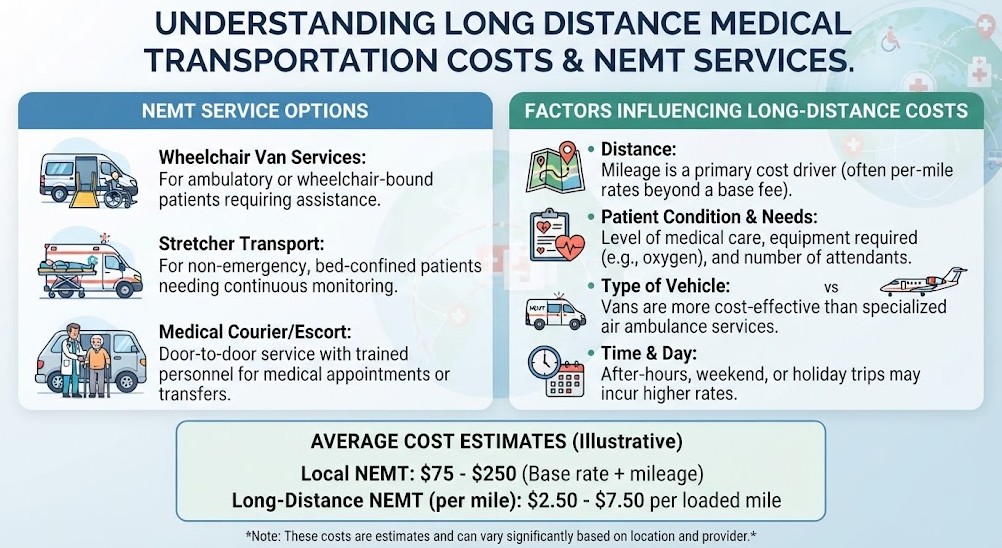
There is no single price that applies to every medical transportation trip. The final cost can depend on the distance, whether the trip is one-way or round-trip, the type of vehicle required, the passenger’s mobility needs, waiting time, additional stops, and the transportation provider’s pricing structure.
For patients, seniors, caregivers, and families, understanding these factors before requesting transportation can make it much easier to compare options and receive an accurate quote.
This guide explains how long distance medical transportation is typically priced, what can increase or decrease the cost, what information you should provide when requesting a quote, and how insurance or Medicaid may affect what you pay.
How Much Does Long Distance Medical Transportation Cost?
Long distance medical transportation cost varies from trip to trip, so a trip-specific quote is generally more useful than relying on a single national average.
A transportation provider may consider several factors when calculating the price, including:
- Total mileage
- Travel time
- One-way or round-trip transportation
- Vehicle type
- Passenger mobility level
- Wheelchair or stretcher requirements
- Waiting time
- Additional stops
- Pickup and drop-off requirements
- Geographic location
- Special assistance requirements
- Whether transportation is private-pay or arranged through a qualifying health plan or government program
For example, transporting an ambulatory passenger to a nearby city is a very different trip from transporting a wheelchair user several hours away and waiting while they attend a medical appointment.
That is why the most reliable way to determine your long distance medical transportation cost is to provide the transportation company with the complete details of your trip and request a quote.
What Factors Affect Long Distance Medical Transportation Cost?
Distance and Mileage
Distance is one of the most obvious factors affecting long distance medical transport pricing.
A longer trip generally requires more driving time, vehicle use, fuel, and driver time. However, transportation companies do not necessarily calculate every trip using the same simple per-mile formula.
Some providers may use mileage-based pricing, hourly pricing, flat trip rates, or a combination of factors.
When comparing quotes, ask whether the quoted price already includes the expected mileage and whether additional mileage could change the final amount.
One-Way vs. Round-Trip Transportation
A one-way medical transportation trip takes the passenger from the pickup location to the destination.
A round-trip medical transportation trip includes transportation back to the original location or another agreed destination.
The difference can be significant for longer medical appointments.
If you are traveling to a specialist several hours away, tell the provider whether:
- You need transportation only to the appointment
- You need the driver to remain available while you attend the appointment
- You need a scheduled return trip later
- You need a different return destination
Do not assume that a round-trip price is simply double the one-way price. Ask the provider how the complete trip is calculated.
Type of Medical Transportation
The required level of transportation can also affect pricing.
Depending on the provider and the passenger’s needs, options may include:
- Ambulatory transportation
- Wheelchair transportation
- Stretcher transportation
A passenger who can safely enter and exit the vehicle independently may require a different vehicle and level of assistance than someone who must remain in a wheelchair or travel on a stretcher.
Not every NEMT provider offers every transportation type, so explain the passenger’s mobility requirements before requesting a quote.
Waiting Time
Waiting time can become particularly important for long-distance medical appointments.
Suppose a driver transports a passenger several hours to a specialist appointment. The appointment may take 30 minutes, two hours, or substantially longer.
Depending on the provider’s policies, waiting time may be included, billed separately, or handled through a scheduled return trip.
Ask specifically:
Is waiting time included in the quoted price?
This simple question can prevent unexpected charges.
Additional Stops and Special Requirements
A trip involving multiple destinations can require additional planning.
Examples might include:
- Hospital to rehabilitation center
- Medical appointment followed by a pharmacy stop
- Multiple medical facilities
- Different pickup and drop-off locations
- Assistance with mobility equipment
- Additional passenger or caregiver
Tell the transportation provider about these requirements when requesting the quote rather than adding them after the trip has already been scheduled.
Is Long-Distance Medical Transportation More Expensive Than Local Transportation?
It often can be, because a long-distance trip may involve considerably more mileage and driver time than a local appointment.
Long-distance transportation can also require:
- More vehicle operating time
- More fuel
- Longer driver commitments
- Additional scheduling coordination
- Extended waiting periods
- Return-trip planning
However, comparing providers based only on a per-mile figure can be misleading.
A lower advertised mileage rate does not necessarily mean a lower total trip cost if other charges apply.
Instead, compare the complete transportation quote and confirm what is included.
What Is Included in a Long-Distance Medical Transportation Quote?
Before booking, ask the transportation provider to clarify the entire trip.
A useful quote should identify, where applicable:
| Quote Detail | Why It Matters |
|---|---|
| Pickup location | Establishes the starting point |
| Destination | Determines the travel route and distance |
| Mileage | Helps explain transportation pricing |
| One-way or round-trip | Changes the scope of the trip |
| Vehicle type | Determines whether the vehicle meets the passenger’s needs |
| Mobility requirements | Helps determine appropriate transportation |
| Waiting-time policy | Important for medical appointments |
| Additional stops | Can affect scheduling and pricing |
| Additional fees | Prevents surprises |
| Cancellation policy | Important if the appointment changes |
| Estimated total | Gives you the clearest basis for comparison |
If a quote is unclear, ask the provider to explain exactly what is included before confirming the trip.
Does Insurance or Medicaid Cover Long-Distance Medical Transportation?
Possibly, but coverage depends on the specific program, eligibility requirements, state rules, medical transportation benefit, and circumstances of the trip.
Medicaid has transportation requirements designed to help eligible beneficiaries access covered medical services, but states have flexibility in how transportation programs are administered. CMS also specifically recognizes situations involving long-distance trips and extended wait times.
That means you should not assume that Medicaid will automatically pay for a particular long-distance trip.
Depending on the program, factors may include:
- Medicaid eligibility
- Whether the destination provides a covered service
- Medical necessity or transportation eligibility
- Prior authorization
- The state’s transportation program
- Managed care arrangements
- Whether the transportation provider participates in the applicable program
For example, Florida’s Medicaid state plan describes NEMT services for eligible recipients and includes multiple transportation modes, with prior approval requirements depending on the recipient’s circumstances.
If you are using Medicaid, contact the applicable Medicaid transportation broker, managed care plan, or state agency before assuming that a private-pay quote will be reimbursed.
How to Save Money on Long-Distance Medical Transportation
Reducing transportation costs should never mean choosing an inappropriate or unsafe transportation option.
Instead, focus on avoiding unnecessary charges and getting accurate information upfront.
Schedule in Advance
Advance notice can make transportation planning easier, particularly for long-distance trips that require significant driver time.
Request the Complete Trip Price
Ask for the expected total rather than comparing only advertised mileage rates.
Explain Mobility Requirements Clearly
Tell the provider whether the passenger is ambulatory, uses a wheelchair, requires a stretcher, or needs additional assistance.
Ask About Waiting Charges
If the driver may need to wait during the appointment, clarify the waiting-time policy before booking.
Confirm One-Way vs. Round-Trip Pricing
Make sure both sides understand whether the quoted transportation includes the return journey.
Compare Complete Quotes
If you contact multiple providers, compare the entire service rather than simply choosing the lowest mileage rate.
How to Get an Accurate Long-Distance Medical Transportation Quote
The easiest way to receive a useful quote is to provide complete trip information from the beginning.
Have these details ready:
- Pickup location
- Medical destination
- Appointment date
- Appointment time
- Expected appointment duration
- One-way or round-trip requirement
- Passenger mobility level
- Wheelchair or stretcher requirement
- Number of passengers
- Any additional stops or special requirements
The more complete the information, the easier it is for a transportation provider to understand the actual scope of the trip.
If you are arranging transportation for an elderly parent, family member, or patient, also explain anything that could affect the transfer or ride itself.
Need transportation for an upcoming medical appointment? Contact Med Rides Palm Coast to discuss your trip and request availability.
Example: Estimating the Cost of a Long-Distance Medical Trip
Hypothetical example: A senior living in Palm Coast needs transportation to a specialist appointment in another Florida city.
The provider would need more information before determining the transportation price.
For example:
- How far is the destination?
- Is the trip one-way or round-trip?
- Can the passenger walk into the vehicle?
- Does the passenger use a wheelchair?
- How long will the appointment last?
- Does the driver need to wait?
- Is another person traveling with the passenger?
- Are there additional stops?
Notice that the destination alone does not determine the final price.
Two passengers traveling from the same starting point to the same medical facility could potentially require different transportation arrangements because their mobility and scheduling needs are different.
The purpose of this example is to show how transportation pricing is determined, not to suggest a specific dollar amount.
Frequently Asked Questions About Long Distance Medical Transportation Cost
How much does long-distance medical transportation cost?
There is no single price that applies to every trip. Distance, vehicle type, mobility requirements, waiting time, trip direction, and other factors can affect the final transportation cost. A trip-specific quote is the most reliable way to determine the expected price.
How is medical transportation pricing calculated?
Providers may consider mileage, travel time, vehicle requirements, passenger needs, waiting time, additional stops, and other trip-specific factors. Pricing methods vary between providers.
Is long-distance medical transportation charged by the mile?
Some providers may use mileage as part of their pricing structure, while others may use hourly, flat-rate, or combined pricing. Ask what the quoted rate includes rather than assuming that every company uses the same formula.
Is round-trip medical transportation more expensive?
A round trip involves additional transportation compared with a one-way trip, but the final pricing structure depends on the provider and trip details. Ask whether waiting time or a scheduled return affects the quote.
Does wheelchair transportation cost more?
It can, depending on the vehicle and service requirements. Wheelchair transportation may require an accessible vehicle and additional equipment or assistance.
Does stretcher transportation cost more?
It may, because stretcher transportation can require specialized equipment, vehicle configuration, and additional assistance. Availability also varies by provider.
Does Medicaid pay for long-distance medical transportation?
Medicaid transportation benefits exist, but eligibility, authorization, covered services, transportation methods, and program administration can vary by state and plan. CMS advises that states have flexibility in administering transportation programs.
How can I get an exact medical transportation quote?
Provide the transportation company with the pickup location, destination, date, appointment time, one-way or round-trip requirement, passenger mobility level, equipment needs, and any special requirements. The provider can then determine whether the trip is available and provide pricing based on the actual circumstances.
What to Ask Before Booking Long-Distance Medical Transportation
Before confirming a long-distance medical ride, make sure you understand:
- Who will provide the transportation?
- What type of vehicle will be used?
- Is the service appropriate for the passenger’s mobility needs?
- Is the quote one-way or round-trip?
- Is waiting time included?
- Are additional stops permitted?
- Are there additional fees?
- What happens if the medical appointment runs late?
- What is the cancellation policy?
- Where and when will pickup occur?
These questions are especially important when arranging transportation for someone who may have difficulty communicating their needs independently.
Get a Long-Distance Medical Transportation Quote
Long distance medical transportation cost depends on much more than the number of miles between two addresses.
Distance, travel time, vehicle type, mobility requirements, waiting time, trip direction, and special requirements can all affect the final price. Insurance or Medicaid may also play a role, but coverage should always be confirmed with the applicable program or plan rather than assumed.
If you are arranging transportation for a medical appointment outside your local area, start by gathering the basic trip details and explaining the passenger’s transportation needs.
Med Rides Palm Coast can help you discuss your transportation requirements and determine the appropriate next step for your trip. Contact the team to request availability and a transportation quote.