
The short version is that Medicaid usually does and Medicare usually does not. That difference catches a lot of Florida families off guard, particularly the ones caring for a parent who has Medicare and assumes it works like every other medical benefit.
Non-emergency medical transportation in Florida is paid for through several separate systems, and which one applies depends entirely on the coverage a person holds. Getting this sorted before the first appointment saves money and avoids the situation where a ride is booked, taken, and then billed to a family who expected it to be free.
How Florida Medicaid Handles Transportation
Florida Medicaid treats non-emergency transportation as a required benefit rather than an extra. It is one of the minimum covered services that every Managed Medical Assistance and Long-Term Care plan has to provide to its members.
Three conditions generally have to line up. The person needs active Medicaid coverage, no other reasonable way to reach the appointment, and a destination that Medicaid pays for. Someone with a working car in the driveway and the ability to drive it will not qualify, and the trip has to be to a covered service rather than to a store or a social visit.
One detail that gets missed is the escort allowance. Florida Medicaid covers transportation for the recipient and also for a personal care attendant or escort when the person’s condition calls for one. Families who assumed a parent would travel alone are often relieved to learn someone can ride along at no extra cost.
Booking a Medicaid Ride
The request goes through the member’s health plan, not to the state and not directly to a van company. Each plan either runs transportation itself or contracts with a broker, and the plan explains how to request a trip, how much notice is needed, and what information to have ready.
Most plans want around three business days of notice and treat twenty-four hours as the absolute floor. Same-day requests are generally not accommodated except in specific urgent situations.
Florida moved to a new set of managed care contracts in February 2025, which reorganized the program across nine regions and reassigned many members to different plans. Anyone who has not checked their transportation arrangements since then should confirm which plan they are in and how that plan handles rides, because the process may have changed even though the benefit did not.
What Medicare Actually Covers
This is where the expectations and the reality part ways.
Original Medicare, meaning Parts A and B, does not pay for routine rides to medical appointments. There is no benefit for it. A person with Original Medicare who needs a ride to a cardiology appointment is paying for that ride themselves or finding another way.
Part B does cover ambulance transportation, but the bar is high. The patient’s condition has to make any other form of travel unsafe, and Medicare pays 80 percent of the approved amount after the deductible is met. A standing dialysis appointment or a scheduled specialist visit does not meet that standard on its own, no matter how difficult the trip is for the patient.
Medicare supplement policies, often called Medigap, fill gaps in what Original Medicare pays. They do not add benefits Medicare never had, so none of them create a transportation benefit.
Medicare Advantage Plans Are Different
Medicare Advantage is where transportation sometimes appears. Some plans add it as a supplemental benefit, though only a portion of plans do, and the ones that do usually cap the number of one-way trips per year.
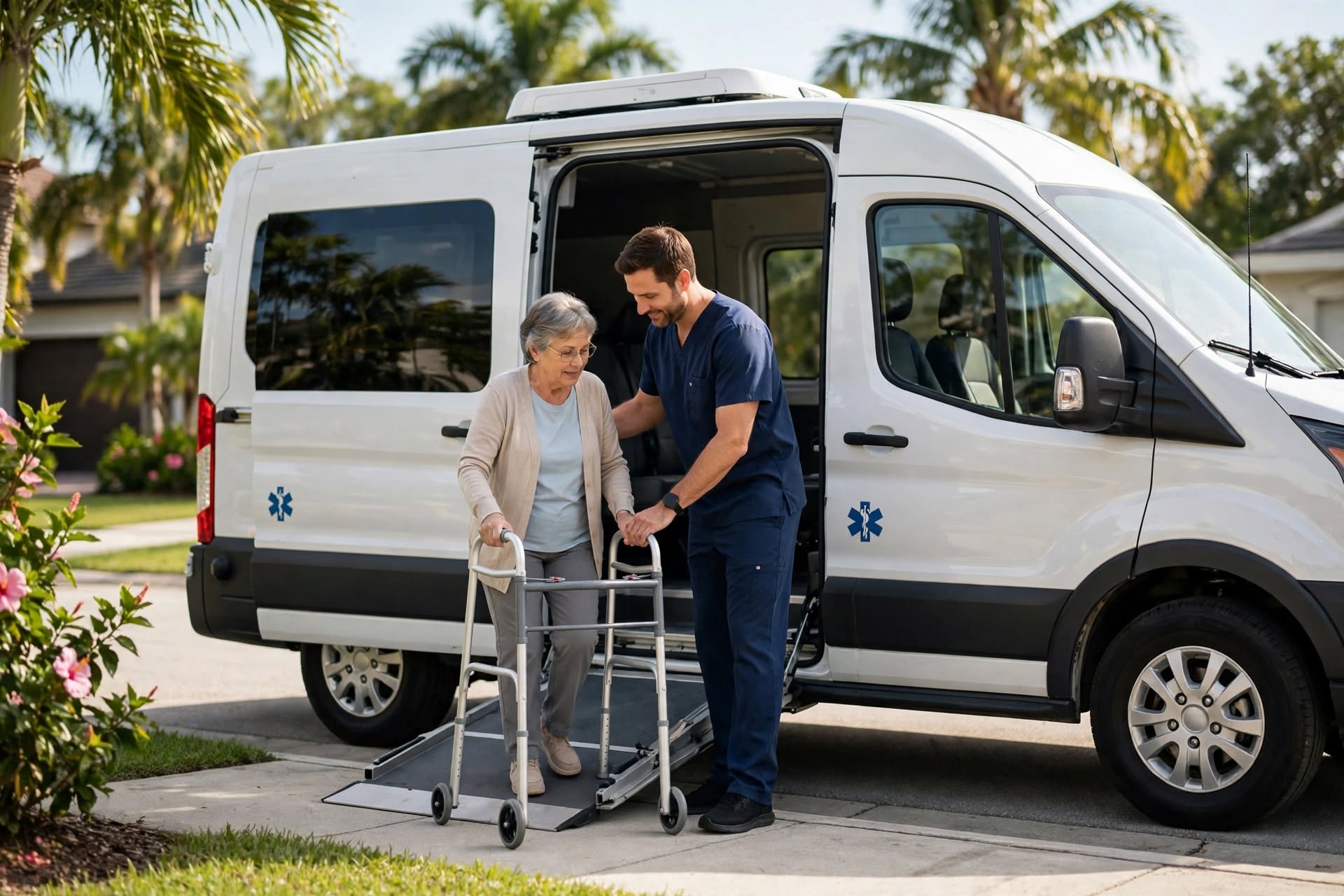
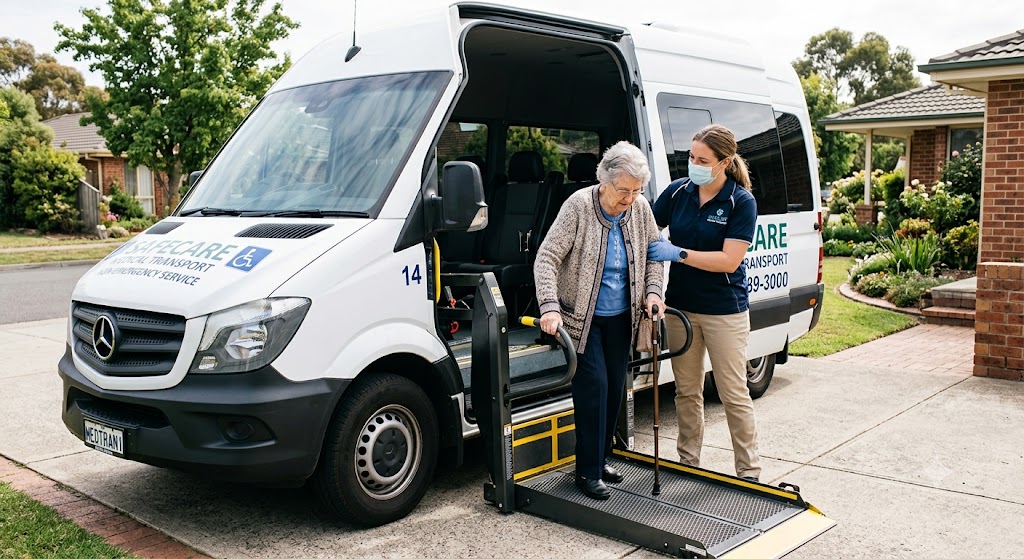
Several plans book these trips through rideshare partners, which means the arrangement runs through the plan rather than through an app on a phone. That works fine for a passenger who can walk to the curb unassisted. It works poorly for someone who uses a walker, travels with oxygen, or needs an arm across a parking lot.
The annual cap matters more than people expect. A plan offering twenty-four one-way trips sounds generous until a dialysis schedule is applied to it, at which point the allowance runs out in about a month.
Anyone counting on this should read the plan’s summary of benefits or call member services before the first appointment.
People Who Have Both Medicare & Medicaid
Dual eligible adults are the group most likely to leave a benefit unused. They carry a Medicare card, assume Medicare governs everything medical, and never think to ask their Medicaid plan about rides.
For transportation, the Medicaid plan is the one to call. The benefit is there, it covers trips to Medicare-covered appointments as well, and it costs nothing. Anyone with both cards in the wallet should start with the Medicaid side.
When Nothing Covers the Ride
Plenty of Floridians fall outside all of this. They have too much income for Medicaid, hold Original Medicare or a plan without a transportation benefit, and still cannot drive themselves.
County paratransit exists across most of Florida for riders who cannot use fixed route buses, and fares are low. The tradeoffs are shared vehicles, long booking windows, and pickup times that sit well before and after an appointment. Volunteer driver programs run through churches and senior centers in many communities at little or no cost, though availability depends on how many volunteers a program has that month.
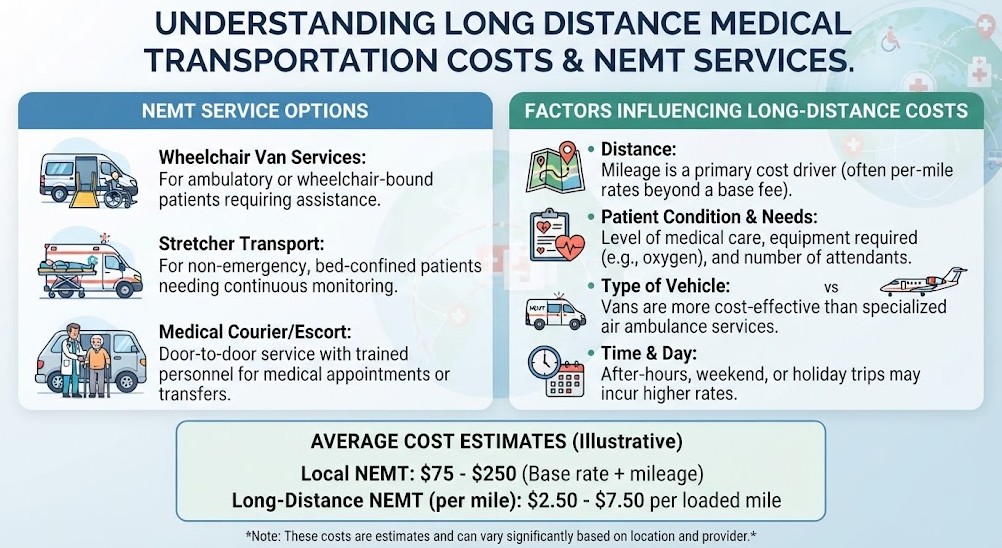
Private non-emergency providers fill the rest. Pricing works on a base rate plus a distance charge, with the base rising as the level of assistance goes up. Nothing is covered, but the service is scheduled around the passenger rather than the other way around.
Sorting This Out Before the First Trip
Start with the insurance card, because a covered ride costs nothing and settles the question immediately. Medicaid members should call their managed care plan. Medicare Advantage members should check the summary of benefits rather than assuming either way. Anyone with both cards should ask the Medicaid plan first.
If no coverage applies, compare the local options on what actually matters for that passenger, which is how much notice each requires, how much help the driver gives, and how reliably the pickup happens. A cheap ride that arrives ninety minutes early and leaves a passenger waiting two hours afterward is not always the better deal.