
Most people start searching for medical transport near me at a bad moment. A discharge is happening tomorrow, a parent has stopped driving with no warning, or a dialysis schedule has just started and the family has realized nobody can cover three mornings a week indefinitely.
That urgency is exactly why the first result gets called and the questions get skipped. Flagler and Volusia counties have a number of operators working the same stretch of coast, and they differ more than their websites suggest. A short list of the right questions sorts them out quickly.
Know Which Service Level You Need First
Calling with a clear description of the passenger saves time and prevents the worst outcome, which is a vehicle arriving that cannot carry them.
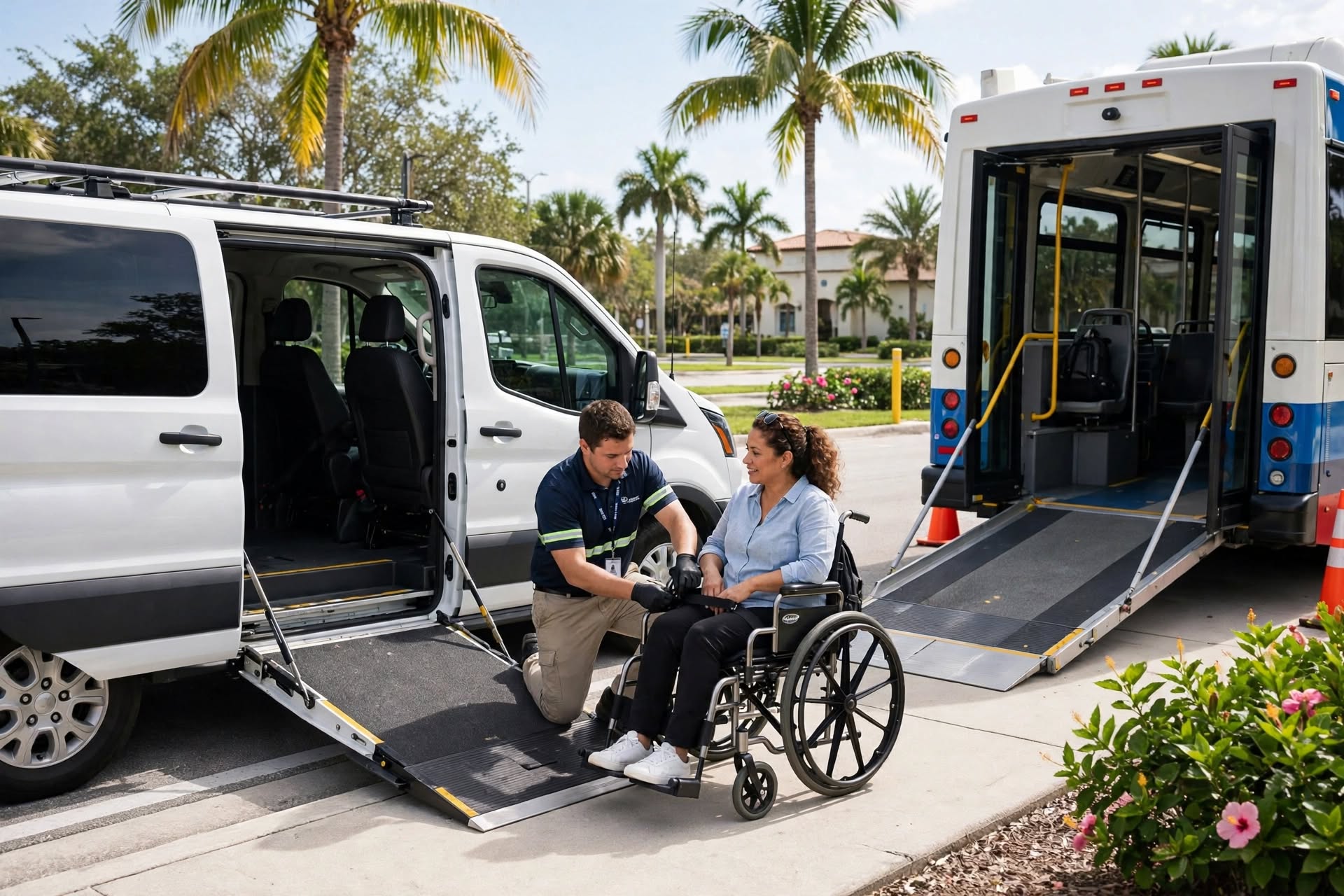
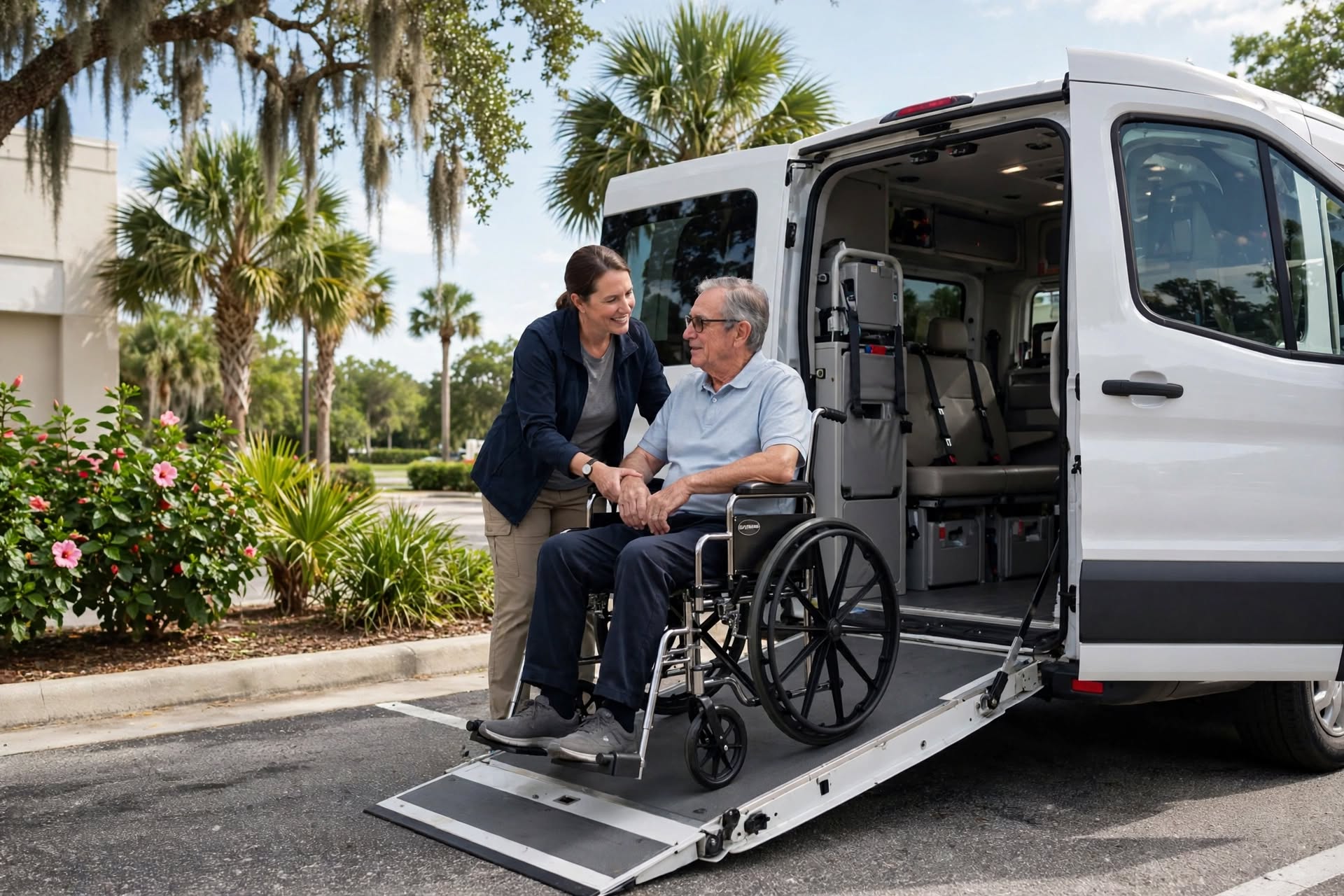
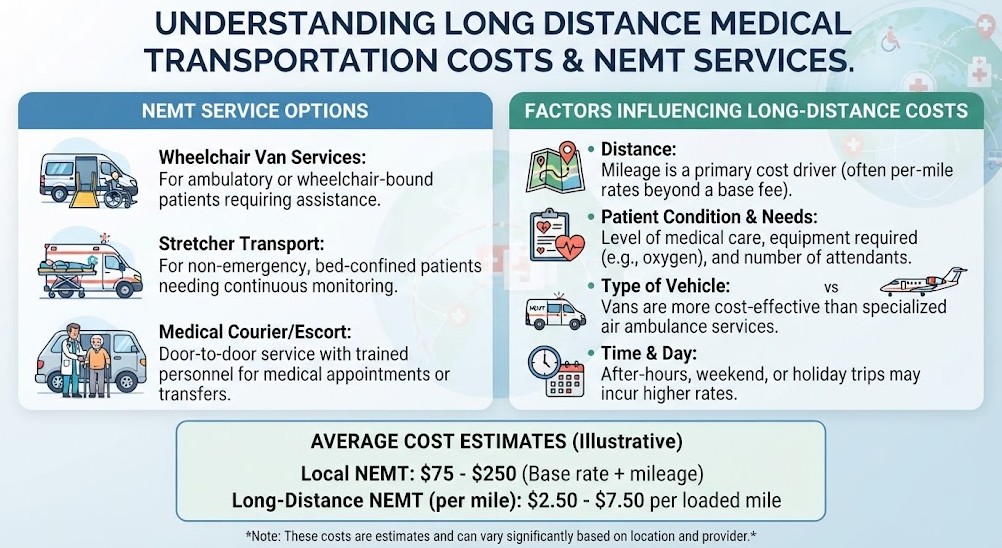
Ambulatory service covers passengers who walk on their own or with a cane or walker and can get into a standard vehicle seat. Wheelchair service means the passenger stays in their own chair, which is loaded by ramp or lift and locked to the floor. Stretcher service is for patients who cannot sit upright at all and must travel lying down.
Not every local company offers all three. Stretcher capability in particular is far less common than the number of websites mentioning it would suggest, so it is worth confirming directly rather than assuming.
Questions Worth Asking on the First Call
What the Price Actually Includes
Ask for the base rate, the per mile charge, and how wait time is billed. Wait time is where quotes and invoices most often part company, since an appointment that runs two hours longer than expected can add a significant amount.
Ask if a round trip is priced differently from two separate one-way bookings, and what happens on a trip where the passenger travels only one way. Some companies bill for the return drive because the vehicle covers that distance regardless.
How They Handle a Late Appointment
This one separates the operators quickly. Some hold the driver on site. Some dispatch a second vehicle. Some ask the family to call when the visit ends and send someone when one is free, which can mean a long wait in a lobby.
There is no single right answer, but there is a right answer for a particular passenger. Someone leaving a chemotherapy infusion should not be waiting ninety minutes for a pickup.
Where the Assistance Starts & Stops
Door-to-door and curb-to-curb are different services and the words get used loosely. Ask directly if the driver comes to the door of the home and walks the passenger into the building at the other end.
Ask what happens with a walker, an oxygen tank, or a bag. Ask if a family member can ride along and at what cost. For passengers with memory difficulty or poor vision, confirm the driver will escort them to the reception desk rather than pointing at an entrance.
Insurance, Screening, & Training
Ask if the company carries commercial liability insurance and if drivers are background checked. Ask what training drivers receive in passenger assistance and transfers, particularly for wheelchair and stretcher service where the handling matters.
A company that answers these plainly is telling you something. One that gets vague is telling you something too.
Local Knowledge Is Worth More Than It Sounds
The medical geography here catches out drivers from further afield. Halifax Health Medical Center and AdventHealth Daytona Beach are both large campuses where appointment letters rarely name an entrance. Palm Coast has two separate AdventHealth hospitals several miles apart, and patients do arrive at the wrong one. Ormond Beach has no hospital of its own, so residents there travel to Daytona for anything beyond outpatient care.
A driver who already knows which door serves the cardiology department saves a passenger a walk they would rather not make. An operator based in the area also gives shorter response times and handles short-notice bookings more easily than one dispatching from another county.
Consistency Matters for Recurring Trips
Anyone setting up transportation for dialysis, therapy, or infusion treatment should ask specifically about standing arrangements. The question is simple: does the pickup time hold week after week, and does the same small group of drivers cover the booking.
Large dispatch networks assign whichever vehicle is nearest, which means a different driver every time. For a passenger with memory difficulty, that turns each trip into a fresh negotiation. Smaller regional operators tend to manage continuity better because their driver roster is short enough to allow it.
Ask what happens when a session moves or a course gets extended, and if that means rebuilding the whole arrangement or making one phone call.
Warning Signs
Be cautious with a company that quotes a single flat figure without asking anything about the passenger, since the price will change once the details emerge. Be equally cautious with one that will not put pricing in writing.
Vagueness about equipment is a genuine concern. A company that says it can arrange stretcher or wheelchair transport without confirming what it operates may be subcontracting the trip, which is not automatically a problem but should be disclosed.
Watch for a company that cannot say what happens if a vehicle breaks down on the day of a scheduled trip. For a one-off errand that is a minor risk. For a dialysis run it is not.
Making the Choice
Call two or three providers and ask the same questions of each. The differences surface fast, usually in how readily they answer rather than in the answers themselves.
Choose based on the passenger rather than the price alone. A slightly higher rate from a company that shows up on time, helps at the door, and keeps the same drivers on a standing booking is generally the better arrangement, particularly for treatment that repeats for months. For a single trip to a routine appointment, the cheapest option that meets the mobility need is usually fine.