
When a family calls to book senior medical transportation for the first time, the question that stops them is usually about mobility. The person on the phone asks how the passenger moves, and the family is not sure which answer is correct. A mother who walks around her kitchen but uses a wheelchair at the mall does not fit neatly into one category.
Getting this right matters more than it sounds. The answer decides which vehicle arrives, how much the trip costs, and how much help the driver is prepared to give. A passenger booked at the wrong level either pays for service they did not need or, worse, has a van turn up that cannot carry them.
Why Providers Sort Passengers This Way
Transportation companies price and staff by mobility level because each one demands different equipment and different amounts of time. An ambulatory pickup takes a few minutes. A wheelchair pickup requires a ramp or lift, floor anchors, and a securing process. A stretcher pickup requires two crew members and a transfer.
Sorting the trip correctly at booking is what makes the schedule hold. When a passenger turns out to need more help than the booking indicated, the driver either cannot complete the pickup or runs long and delays everyone after them.
Ambulatory Passengers
An ambulatory passenger walks independently or with light support. They can get into a standard car or minivan seat, manage a step or two, and walk from the vehicle to a clinic entrance without difficulty.
The vehicle is usually a sedan or a minivan. The driver opens the door, offers an arm if it is wanted, and walks the passenger to the entrance. This is the least expensive level of service.
Plenty of older adults sit here even though they no longer drive. Vision loss, a seizure disorder, or a medication that rules out driving all end someone’s driving without affecting how they walk. These passengers often feel odd about booking medical transportation at all, since nothing about their mobility has changed.
Passengers Using a Cane or Walker
This group causes the most confusion, and most people who book get it wrong in one direction or the other.
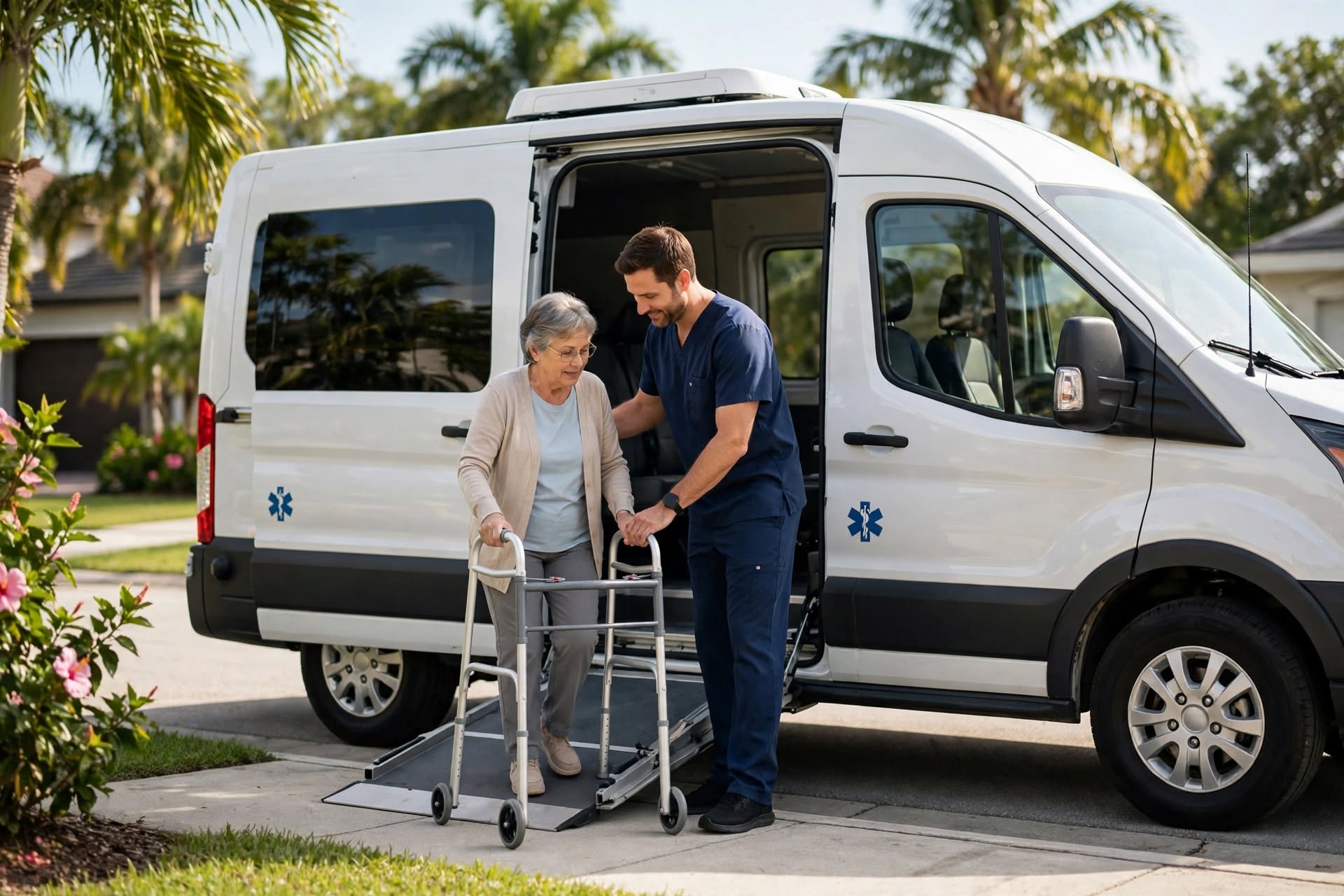
A passenger who uses a walker is generally still ambulatory for transportation purposes. They can transfer into a vehicle seat, and the walker folds and travels in the back. What they need is more time and a steadier hand, not different equipment.
The details worth mentioning at booking are practical ones. A rollator with wheels and a seat is bulkier than a standard folding walker and needs more space. Some passengers can manage a car but struggle with a higher vehicle that requires stepping up. A passenger who uses a walker at home but tires quickly may need a wheelchair once inside a large medical campus, which is worth flagging so the driver can arrange one at the door.
Distance is the thing families forget. Someone who moves confidently across their own living room may find the walk from a parking area to a specialist office genuinely hard.
Wheelchair Passengers
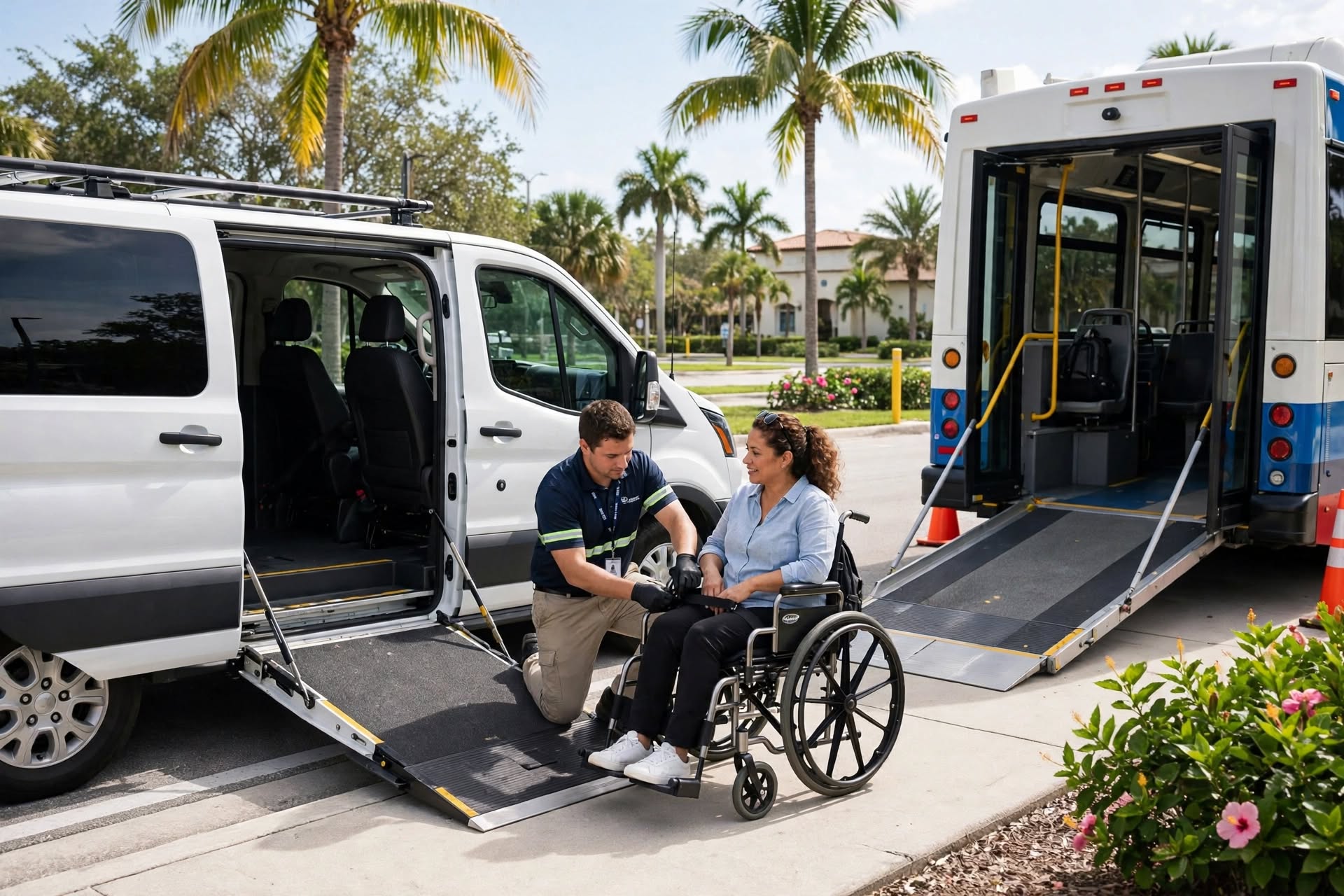
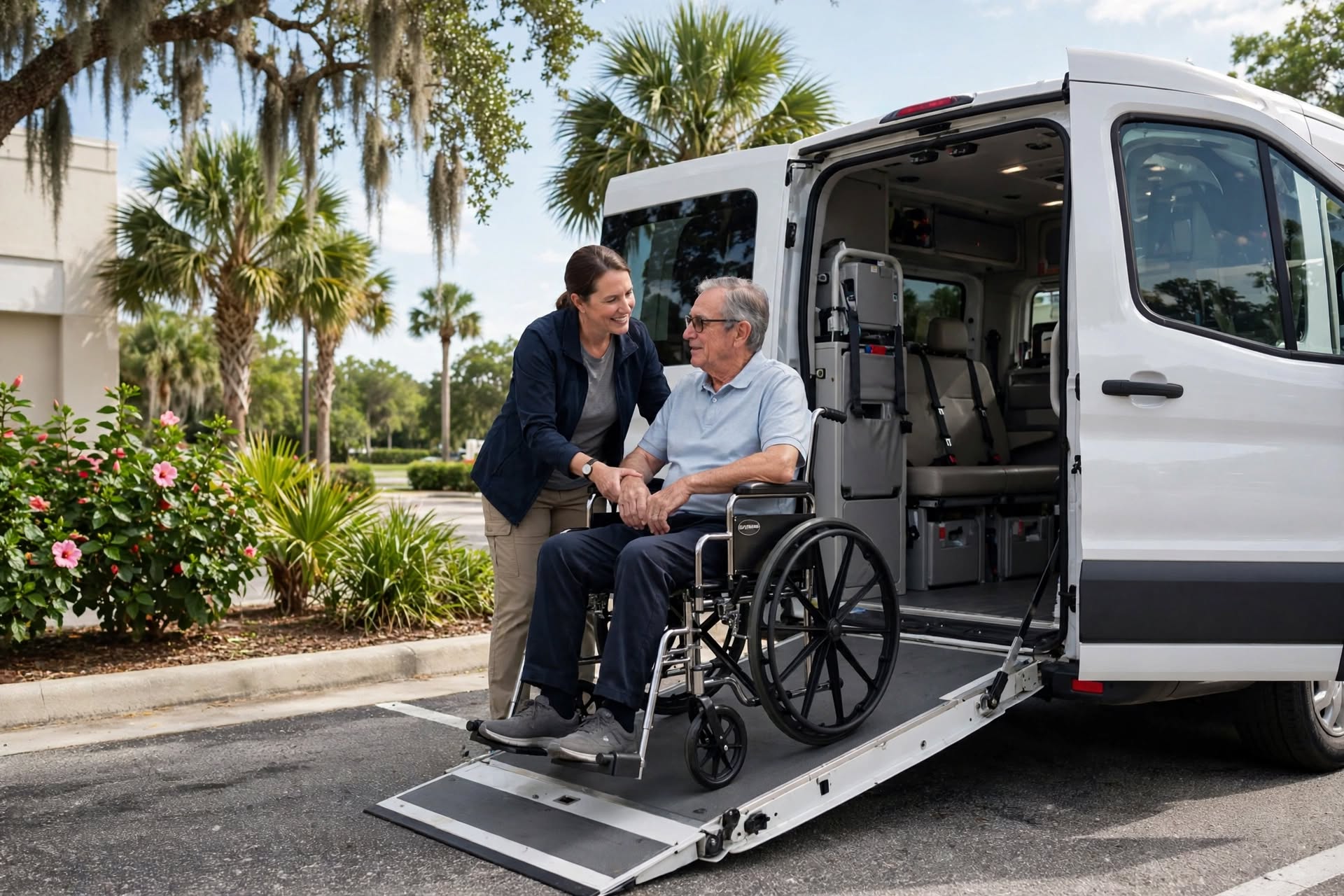
A wheelchair passenger stays in their own chair for the trip. The vehicle is a van with a ramp or a hydraulic lift, and the chair is locked to anchor points in the floor with straps before the van moves.
Two distinctions matter at booking. The first is between a passenger who uses a chair full time and one who can walk short distances but cannot manage a car seat, since the second may have a choice between a wheelchair van and an assisted ambulatory ride. The second is the chair itself. A standard folding manual chair, a rigid lightweight chair, and a powered chair have different weights and dimensions, and a heavy power chair will not fit every ramp or lift.
Give the type of chair when booking, along with an approximate weight for a power chair. It takes ten seconds on the phone and prevents a van arriving that cannot carry the passenger.
Passengers Who Cannot Sit Upright
Some patients cannot sit for the length of a trip at all. Advanced pressure injuries, late-stage illness, recent spinal surgery, and severe contractures all rule out a seated position.
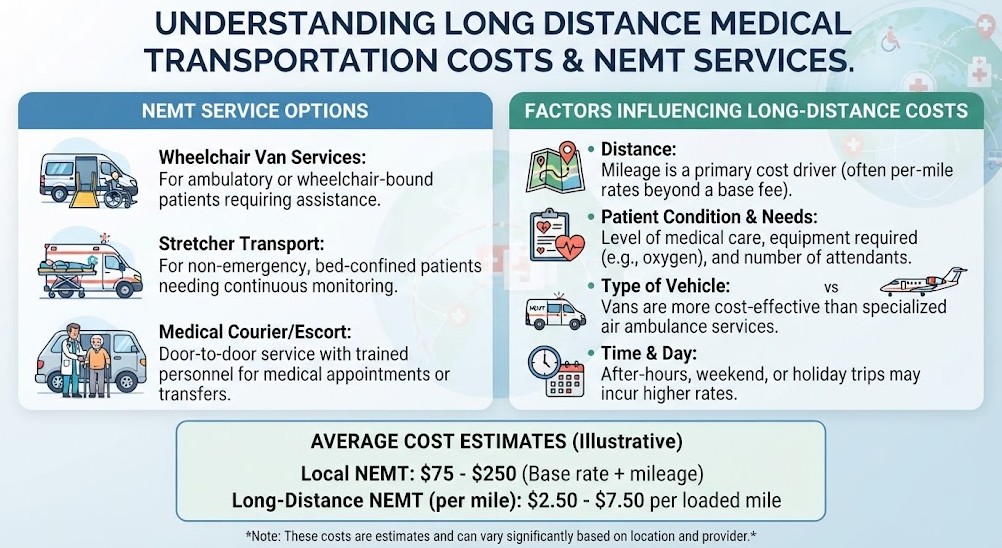
These passengers travel on a stretcher in a van fitted for it, secured with straps and side rails raised, usually with two crew members. The service costs more than any seated option because of the equipment and the staffing. It is not an ambulance and no treatment happens during the drive.
Working Out Which Level Applies
Describing the situation is more useful than picking a label. Providers would rather hear the specifics than a category.
Say how the passenger gets from a bed or chair to a standing position and how far they can walk without stopping. Mention what they use, including a cane, a walker, a manual chair, or a power chair. Note how they normally get into a car and how much help that takes. Describe the pickup location, including steps, a long driveway, or a narrow hallway. Say what the destination looks like at the other end, since a large hospital campus asks more of a passenger than a small clinic.
Mention anything that changes day to day. Older adults with arthritis, Parkinson’s, or fluctuating strength genuinely have better and worse mornings, and a good provider will plan around the harder ones rather than the easier ones.
Getting the Level Right the First Time
When in doubt, describe the situation and let the provider choose. Booking one level up costs more than necessary. Booking one level down risks a vehicle arriving that cannot carry the passenger, which means a missed appointment and a fresh round of scheduling.
Mobility also shifts over time. A passenger who was comfortably ambulatory last spring may need more support this year, and a passenger recovering from a joint replacement may move in the opposite direction. It is worth revisiting the arrangement every few months on a standing booking rather than leaving it fixed and hoping it still fits.