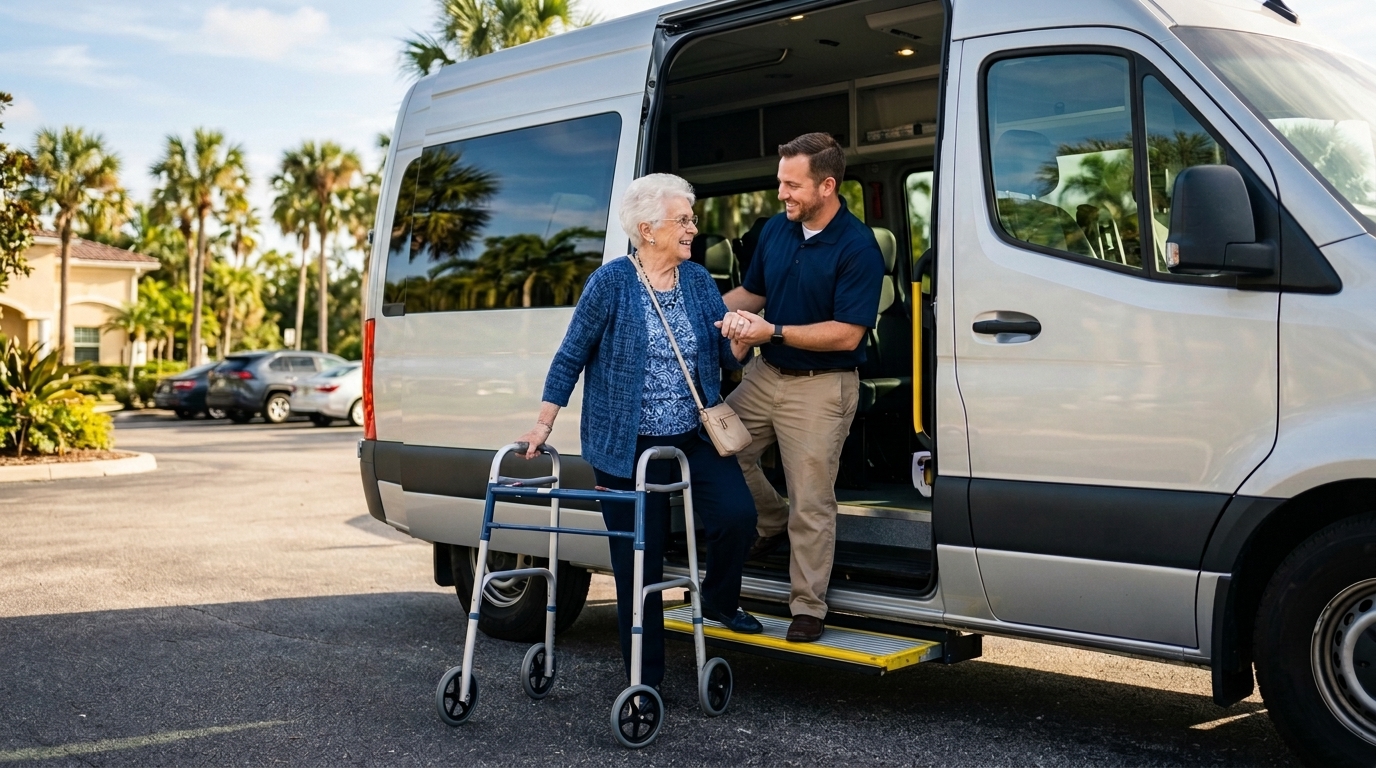
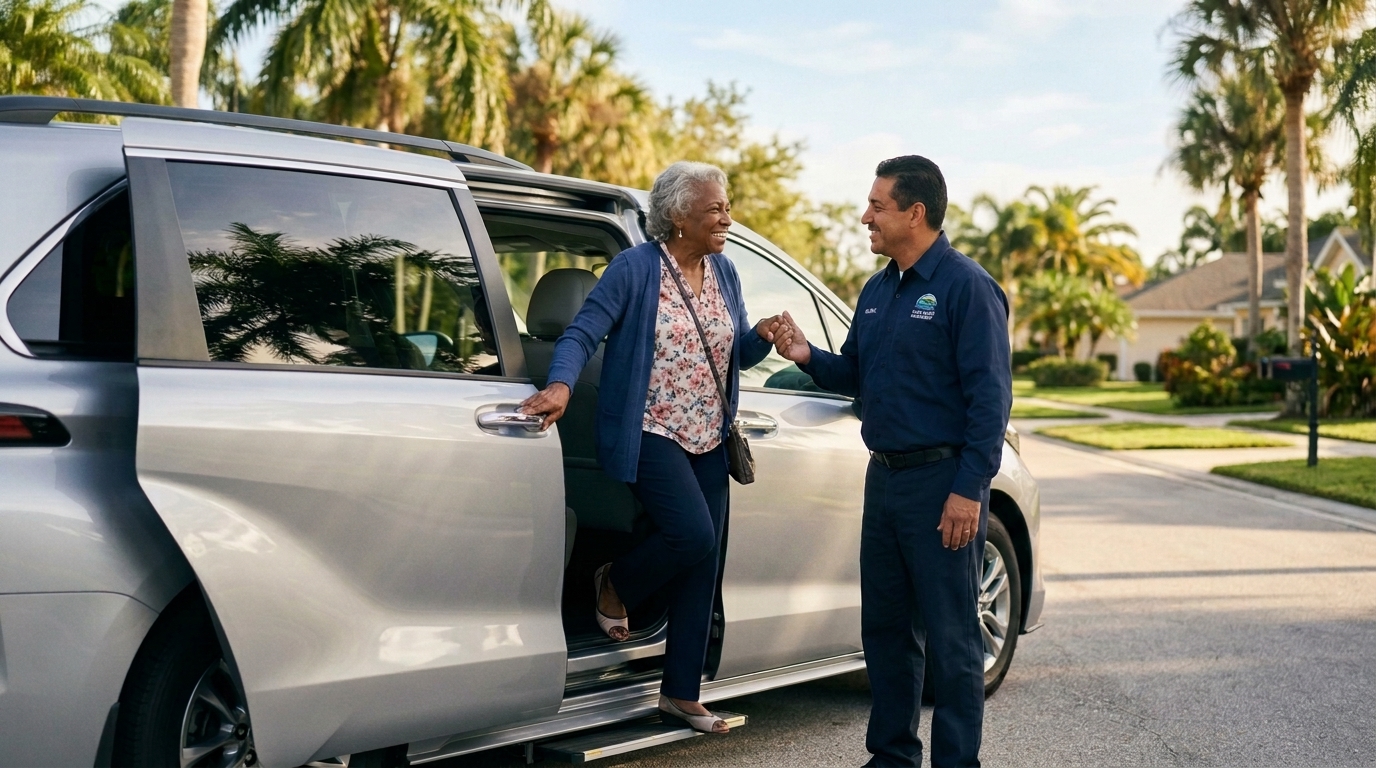
Palm Coast has a large retired population and a street layout that makes walking to most places impractical. When an older adult here stops driving, the question of how they will reach a doctor, a pharmacy, or a standing therapy appointment turns urgent fast. Senior citizen transportation in this area comes from several different directions, and the options do not sit in one place where a family can compare them.
This is a plain account of what exists in Palm Coast and Flagler County, what each option costs in time and money, and which situations each one suits. Some of these are county-run, some are volunteer-based, some come through an insurance plan, and some are paid for out of pocket.
Flagler County Public Transportation
The county runs a demand-response paratransit service, which is the closest thing Palm Coast has to public transit for people who cannot drive. It works as a shared ride, door to door, and older adults make up the largest share of the ridership.
Trips are booked in advance rather than hailed on the day, and the reservation covers a pickup window rather than a fixed minute. The window exists because the vehicle may collect or drop off other passengers during the same hour. Fares are modest compared with any private option.
The application process is straightforward and approval generally takes a few days. Riders using wheelchairs and scooters are accommodated. Rides can be arranged by calling the county transportation office at 386-313-4100.
The tradeoff is time. A shared ride with a pickup window means a passenger may arrive well before an appointment and wait a while afterward. For someone with a flexible morning that is a fair trade for the price. For someone with a tight schedule or low stamina, it is harder.
Rides Through a Medicaid Plan
Older adults enrolled in Florida Medicaid have non-emergency transportation as a covered benefit. The ride is arranged through the member’s managed care plan or the transportation company that plan contracts with, not by calling a van company directly.
Three things generally have to line up. The person needs active Medicaid coverage, no other way of getting to the appointment, and a destination that Medicaid pays for. Most plans want three business days of notice and set twenty-four hours as the minimum.
Adults who qualify for both Medicare and Medicaid often overlook this. If both cards are in the wallet, the Medicaid plan is the first call to make, because a covered ride costs nothing.
Medicare Advantage Transportation Benefits
Original Medicare, meaning Parts A and B, does not pay for routine rides to appointments. Part B covers ambulance service only when a person’s condition makes any other way of traveling unsafe, and a standing appointment does not meet that bar.
Some Medicare Advantage plans add transportation as a supplemental benefit. Only a portion of plans do, and those that do usually cap the number of one-way trips per year. Several book through rideshare partners, which means the trip is arranged through the plan rather than through an app. Medicare supplement policies do not add a transportation benefit at all.
Anyone counting on this should read the plan documents or call member services before the first appointment rather than after.
Volunteer & Community Programs
Churches, senior centers, and nonprofit groups in Flagler County organize volunteers who drive older adults to medical visits. The cost is minimal or nothing at all, and the driver is often someone from the same community.
Availability is the catch. A program depends entirely on how many volunteers it has in a given month, and coverage can thin out over the summer or around holidays. These programs also tend to focus on medical trips rather than errands.
The Eldercare Locator and the helpline are both useful for finding what is currently running, since programs start and stop without much announcement.
Rideshare Apps
Rideshare works for a specific kind of older passenger. Someone who can walk to the curb without help, get into a standard car without assistance, and find their own way through a medical building will do fine with it, and the price for a short trip in Palm Coast is reasonable.
It stops working the moment any of those conditions fail. Rideshare drivers are not trained to assist passengers and are not expected to leave the vehicle. Nobody walks a passenger to the reception desk. A different driver arrives every time, which matters for someone with memory difficulty. Wheelchairs and stretchers are outside the service entirely.
Private Non-Emergency Medical Transportation
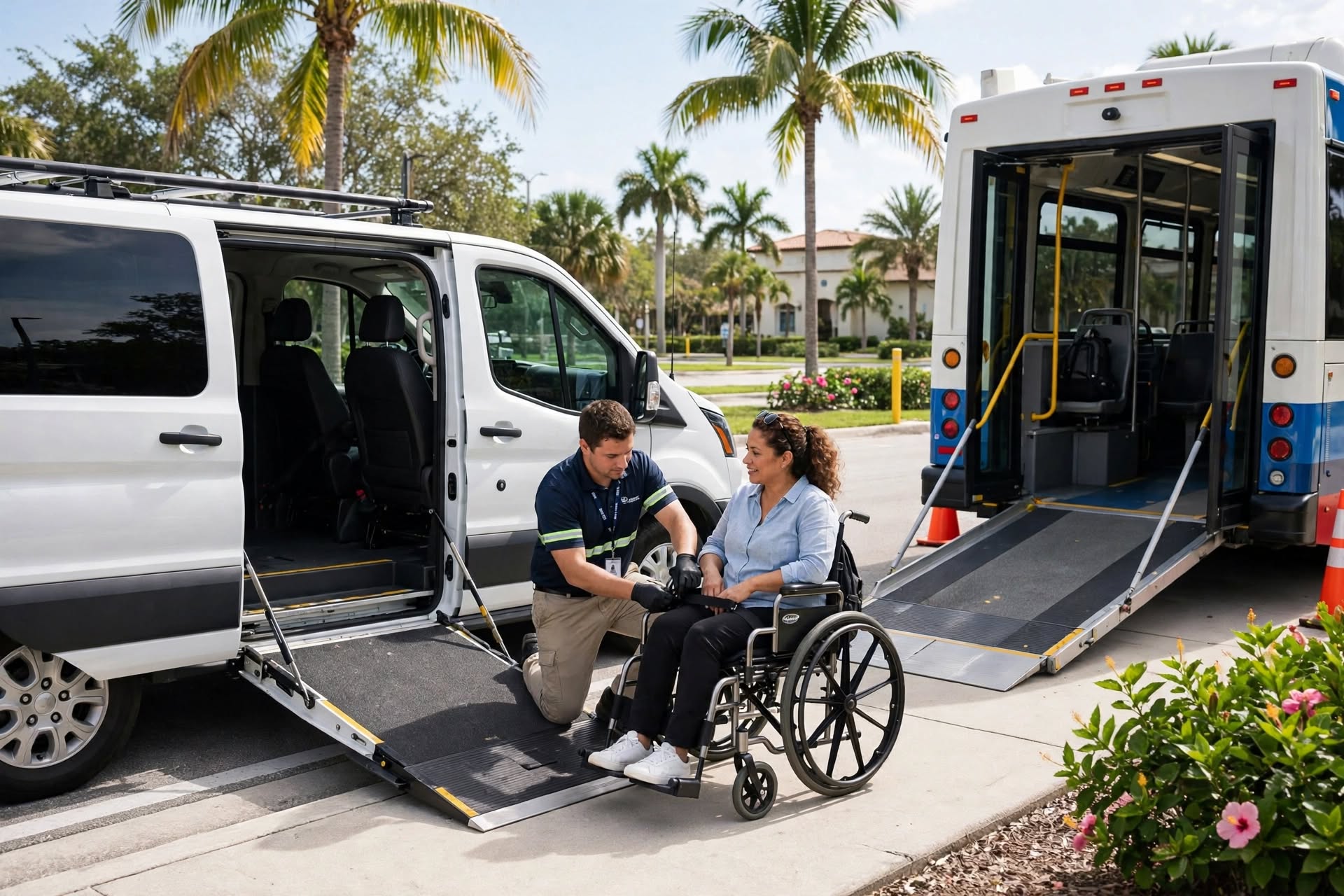
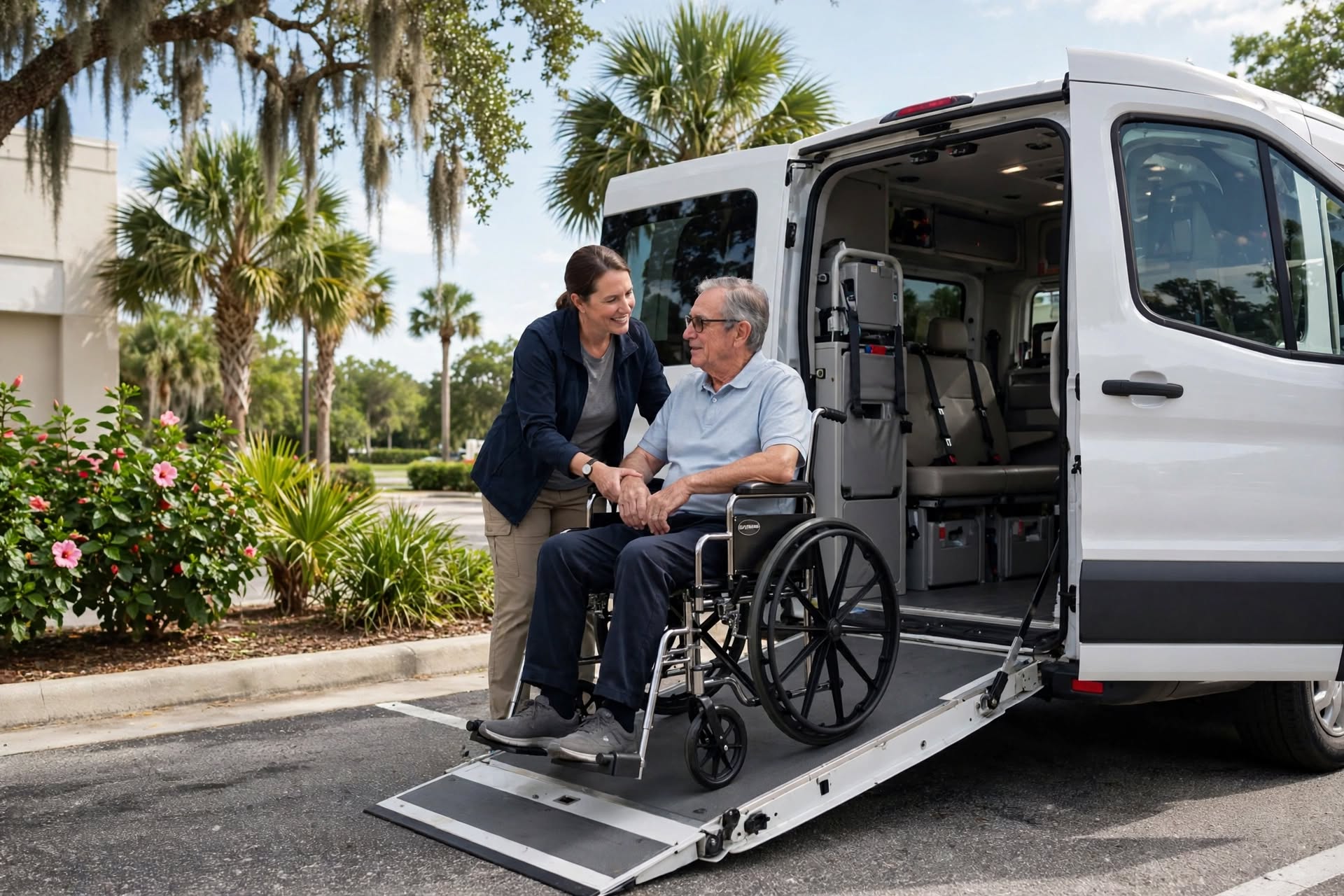
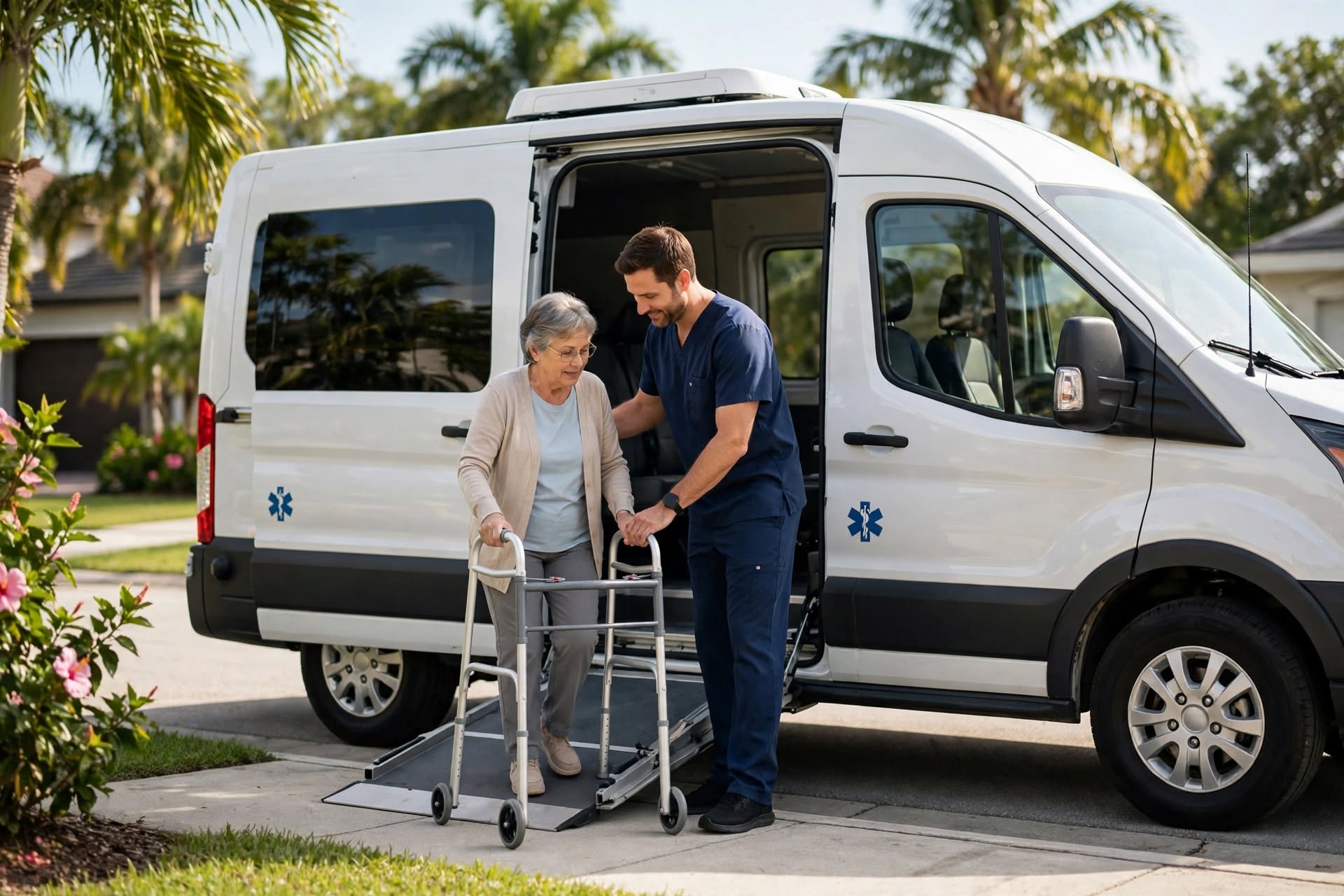
These companies exist specifically for medical trips. Service is door to door rather than curb to curb, drivers are trained to assist passengers, and mobility equipment travels along. Recurring appointments can be set as a standing arrangement with consistent pickup times.
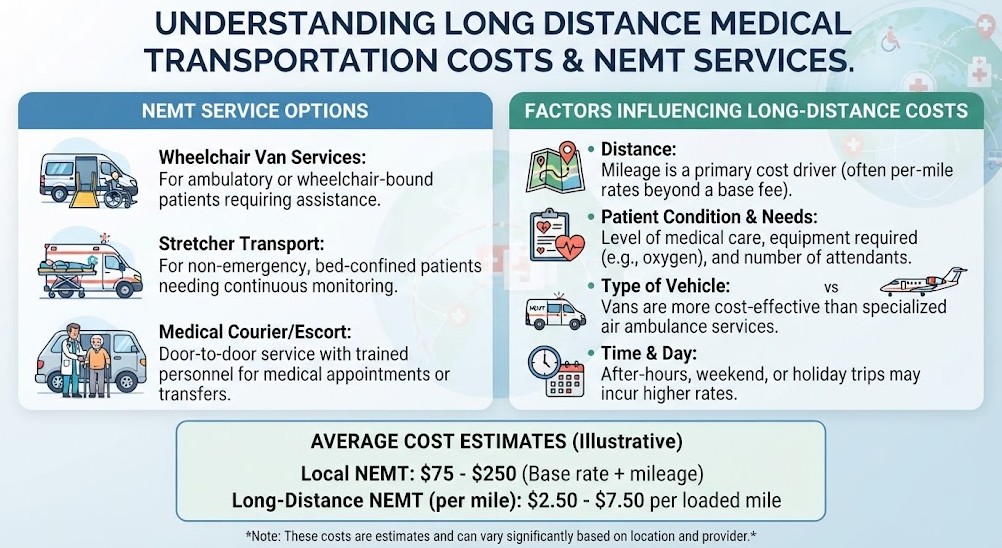
Cost is the main difference. Pricing typically combines a base fee with a per-mile charge, and the base fee rises with the level of assistance needed. Wait time at the destination may be billed separately on longer visits.
For families the calculation is usually simpler than it first appears. A private ride costs real money, but an adult child taking a half day off work to drive a parent to a cardiology appointment costs something too, and it repeats every month.
Matching the Option to the Person
Start with the insurance card, because a covered ride costs nothing and rules out the guesswork. Medicaid members and dual-eligible adults should call their plan first. Medicare Advantage members should check what their plan includes before assuming it includes nothing.
If no coverage applies, the choice comes down to how much help the passenger needs and how flexible their schedule is. County paratransit suits someone who can manage a wait and wants to keep costs down. A volunteer program suits someone with predictable, occasional medical trips. Rideshare suits an independent passenger making a short trip. A private provider suits anyone who needs assistance at the door, travels with equipment, or is on a treatment schedule where missing a session is not an option.
Most families end up using more than one of these. Paratransit for the routine visits, something faster and more reliable for the appointments that cannot slip. There is no reason to pick a single answer and stay with it.